GPS Trackers for RC Planes: The Complete Guide (2026)

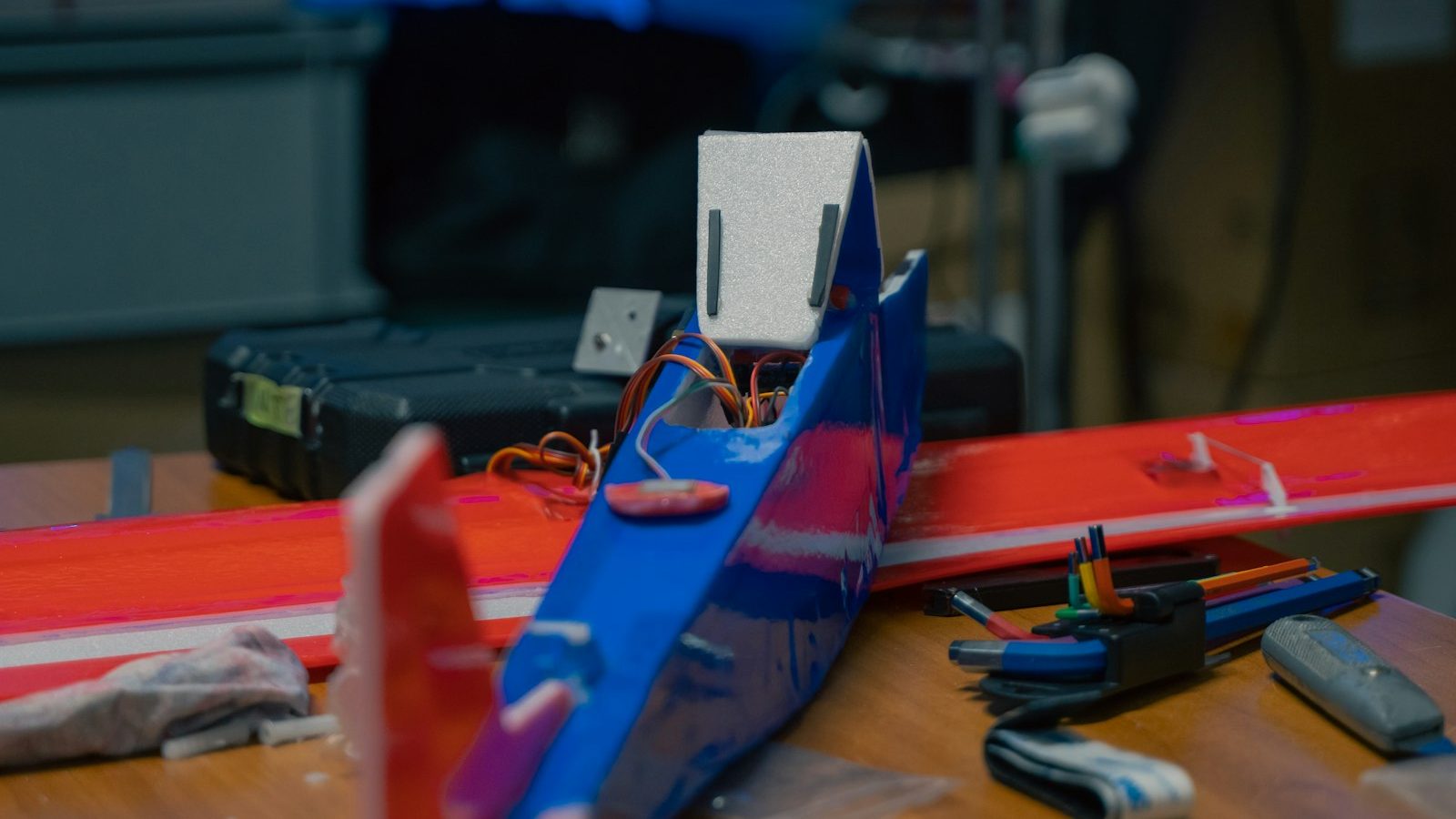
Photo: @cybersenpai via Unsplash
In this article
Affiliate disclosure: As an Amazon Associate, RemoteControlCarsBlog may earn from qualifying purchases.
Lose sight of your RC plane and your heart sinks — a flyaway or an out-of-sight crash can cost you an expensive model. A tracker is cheap insurance that helps you find and recover it. Here’s everything you need to know.
RC planes can travel surprisingly far and fast, and a sudden flyaway or a crash behind the treeline can mean a long, hopeless search. A GPS tracker for your RC plane See RC plane trackers on Amazon #ad turns that nightmare into a quick recovery — cheap insurance for a model worth far more.
This guide explains how the different trackers work, the crucial role of weight, which type suits where you fly, and how to use one. Let’s make sure you never lose a plane again. 📡
📋 What’s Inside (Table of Contents)
📡 Why You Need a Tracker
RC planes fly fast and far, and things go wrong: a radio glitch causes a flyaway, a gust carries the plane downwind, the motor cuts out over a field, or it disappears behind trees and you simply lose sight of it. When that happens, a model that cost you a lot of money — and many happy hours of building — can vanish in seconds.
A tracker is your safety net. For a small fraction of the value of a good plane, it gives you the location or a way to home in on your model, turning a frantic, often fruitless search into a calm recovery. Beyond the money saved, it’s the peace of mind that lets you fly farther and worry less.
Ask any veteran flyer and they’ll tell you the same thing: it’s not if you’ll have a flyaway, it’s when. A tracker is the difference between “I lost my plane” and “I found my plane.” 📡
⚙️ How GPS Trackers Work
At the simplest level, a tracker has two jobs: figure out where it is, and tell you. GPS-based trackers use satellites to pinpoint a location, then report it to you — over a cell network, for example. Other “trackers” skip GPS entirely and instead emit a radio signal you home in on with a handheld receiver.
There’s also an important distinction between live tracking (the device keeps telling you where it is, moment to moment) and last-known position (you get the final spot it reported before signal was lost). Each approach has strengths and weaknesses depending on where and how you fly, which is why choosing the right type matters more than any single spec.
🧩 The Types of Trackers
These four cover almost every option. The two heavyweights for genuine flyaway recovery are RF radio beacons and cellular GPS trackers, while Bluetooth tags and your plane’s own telemetry make useful, cheaper backups. We’ll dig into each below.
🔍 What to Look For
Weight tops the list, but coverage is the deciding factor for recovery: a tracker that needs cell signal is useless where there’s none. Look for something light, with long battery life and a recovery method that suits where you fly. See mini trackers on Amazon #ad
🎯 Which Type Is Right for You?
The honest truth is that the “best” tracker depends entirely on where you fly. For wooded or remote spots, an RF beacon wins because it doesn’t rely on cell or clear sky. For wide-open areas with good cell coverage, a cellular GPS tracker gives convenient live tracking. Many serious flyers even run more than one approach for full coverage.
⚖️ The Big One: Weight
Before anything else, consider weight. Every gram you add to a plane affects how it flies, and small models are especially sensitive. A tracker that’s too heavy can throw off the balance, shorten flight time, or make a light plane sluggish and unstable — defeating the point.
The good news is that recovery trackers have become impressively small and light. Just be sure to pick one your plane can carry without upsetting its center of gravity — a quick balance check after mounting is well worth the effort.
📶 Cellular GPS Trackers
A cellular GPS tracker uses satellites to find its position and a cell network (via a SIM) to send that location straight to your phone or an app, often live. The big advantage is range: as long as there’s cell coverage, you can see your model’s location from far away, even miles off, and watch it move in real time.
The trade-offs are that they usually require a subscription, and — crucially — they depend on cell coverage and a clear sky. Fly somewhere remote with no signal, or have your plane come down under thick tree cover that blocks the GPS satellites, and a cellular tracker can leave you stuck. They’re excellent for open areas with good coverage, less so for the backcountry. See GPS trackers on Amazon #ad
📻 RF / Radio Beacons
RF (radio frequency) recovery systems take a completely different, and for RC often superior, approach. A tiny tag on your plane pairs with a handheld locator that shows you distance and direction, guiding you toward your model like a game of “hotter, colder” until you’re right on top of it. Systems like Marco Polo are popular favorites in the RC world for exactly this.
The killer advantage: they need no cell coverage and no GPS reception, and typically have no monthly fees. That means they work in dense forest and remote areas — precisely the places GPS and cellular trackers fail — with long line-of-sight range and battery life measured in many days. The trade-off is that you have to physically head toward the signal rather than just reading coordinates off a map, but for recovering a downed plane in the woods, that’s often exactly what you want. See RF recovery trackers on Amazon #ad
🔵 Bluetooth Tags & Telemetry
Bluetooth tags (the AirTag-style kind) are tiny and cheap, but their range is very short — only useful once you’re already close to your model, or if it lands somewhere a passing phone might detect it. They’re a fine inexpensive backup, but they are not a reliable solution for a genuine long-range flyaway.
Onboard telemetry and GPS deserve a mention too. If your plane has a GPS-equipped flight controller or telemetry, your radio or app can log the last-known position before signal loss. After a typical crash landing, that often puts you right on top of the model. It’s a great free safety net, but it shows only the last reported point, not live guidance, so many flyers pair it with a dedicated tracker. A simple lost-model beeper also helps you pinpoint a plane audibly once you’re nearby.
🔧 Mounting & Using a Tracker
Mount the tracker securely so it survives a crash, but somewhere you can still reach it to charge and switch on. Place it near the plane’s balance point so it doesn’t upset the center of gravity, keep any antenna unobstructed, and make sure it won’t interfere with your control radio (good recovery trackers are designed not to).
Then build good habits: charge it before every session, test that it works before you fly, and note your launch point. If the worst happens, act quickly while the battery is fresh, recall the direction the plane was last heading, and let the tracker do its job. A little routine makes recovery dramatically more likely. Also remember that in many places, larger aircraft must follow registration and Remote ID rules — some modules even combine a finder with Remote ID compliance — so check your local regulations.
⚠️ Common Mistakes (and Easy Fixes)
Mistake 1: Choosing a tracker that’s too heavy.
It harms flight performance. Fix: Match the tracker’s weight to your plane.
Mistake 2: Relying on cellular where there’s no coverage.
No signal means no location. Fix: Use an RF beacon for remote or wooded areas.
Mistake 3: Trusting Bluetooth for long range.
Its range is tiny. Fix: Use it only as a close-range backup.
Mistake 4: Flying with a dead tracker battery.
It can’t help you if it’s off. Fix: Charge and test it before every flight.
Mistake 5: Mounting it where the antenna is blocked.
It weakens the signal. Fix: Mount with a clear antenna path, away from interference.
🔥 Pro Tips
- Match the tracker to where you fly. RF for woods and remote spots; cellular for open, covered areas.
- Weigh it first. Confirm your plane can carry it without balance issues.
- Charge and test every time. A tracker only helps if it’s powered and working.
- Note your last-seen direction. It narrows the search instantly.
- Consider a backup. Onboard GPS plus a dedicated tracker covers more scenarios.
❓ Frequently Asked Questions
Do I really need a GPS tracker for my RC plane?
If your plane is valuable or you fly anywhere it could be lost, it’s well worth it. Flyaways and out-of-sight crashes happen even to experienced pilots, and a search without help is often hopeless. For a small fraction of a good plane’s value, a tracker dramatically improves your odds of recovery and gives real peace of mind, letting you fly with far less worry.
What’s better, a GPS tracker or an RF beacon?
It depends on where you fly. Cellular GPS gives convenient live location on your phone but needs cell coverage and a clear sky, so it struggles in remote areas and under tree cover. RF beacons need neither and have no monthly fees, making them superb for forests and remote spots, though you home in on foot rather than reading a map. Many flyers value RF most for true recovery.
How much weight does a tracker add?
It varies, but the lightest dedicated recovery tags weigh only around 12 grams, light enough for many small models, while larger or longer-range units weigh more. Weight is the single most important factor, since too much can upset a plane’s balance and performance. Always check the tracker’s weight against what your specific plane can carry, and mount it near the balance point.
Will a tracker interfere with my radio control?
A well-designed recovery tracker shouldn’t. Quality RF systems, for instance, only transmit when you activate the search from the handheld locator, so they stay silent and interference-free during flight. To be safe, mount any tracker a little away from your receiver and antennas, and test your control link with the tracker installed before flying. Choosing a reputable, RC-focused product avoids most issues.
Do trackers work after a crash?
Good ones are built to. Many recovery tags are crush-resistant and even waterproof, so they keep transmitting after a hard landing or a dunk in water, and their multi-day battery life gives you time to mount a search. That durability is a key thing to look for, since a tracker is most needed exactly when your plane has come down hard somewhere out of sight.
Can I use the same tracker on a drone?
Yes. The same trackers used on RC planes work on drones and other model aircraft, and recovery is a common need for both. Note that many drones already log a last-known GPS position in their app, which often suffices after a crash landing, but a dedicated tracker adds valuable backup for true flyaways. Just mind the weight on smaller drones, as with any aircraft.
✅ Final Thoughts
Protect your plane in five steps:
- 📡 Pick a tracker type to match where you fly.
- ⚖️ Check it’s light enough for your plane.
- 🔋 Charge and test it before every flight.
- 🔧 Mount it securely near the balance point.
- 🧭 Note your last-seen direction and act fast.
Bottom line: a tracker is one of the smartest, cheapest investments an RC plane owner can make. Choose the type that fits where you fly — an RF beacon for woods and remote areas, a cellular GPS for open, covered spaces — keep it light enough for your model, and build the habit of charging, testing, and mounting it well. Do that, and a flyaway becomes a recoverable hiccup rather than a heartbreaking loss. Fly far, and fly worry-free. 📡✈️
More flying know-how in our guides on
learning to fly RC helicopters,
the best drones for photography,
RC racing drones, and
the best RC cars.

admin
Our editors are RC drivers first: every guide is written by someone who has owned, broken and rebuilt the category they cover. No paid placements, no fabricated ratings.