Outdoor remote control cars: the complete terrain-by-terrain tutorial

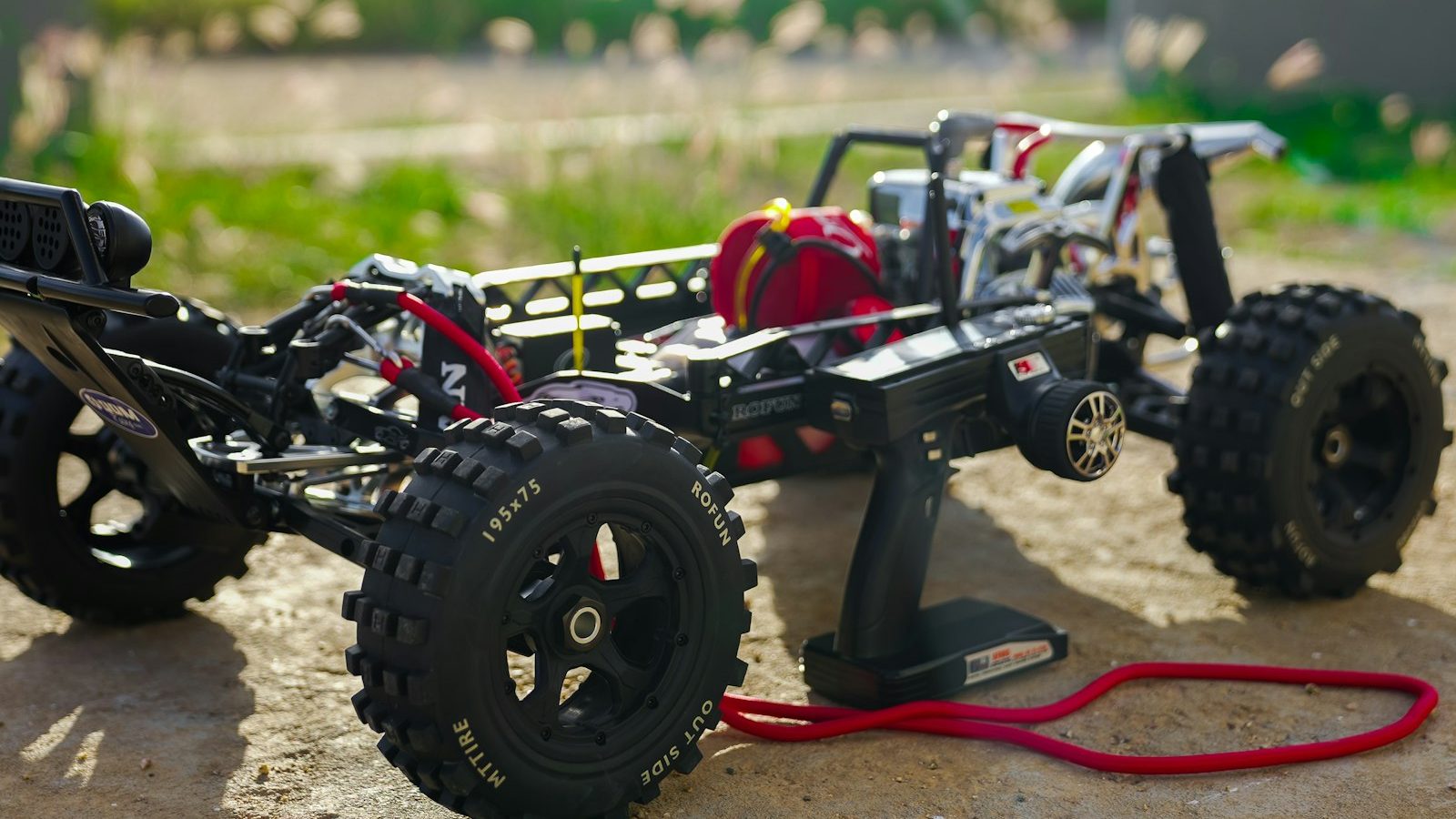
Photo: @brianjtromp via Unsplash
In this article
Affiliate disclosure: As an Amazon Associate, RemoteControlCarsBlog may earn from qualifying purchases.
Terrain Masterclass
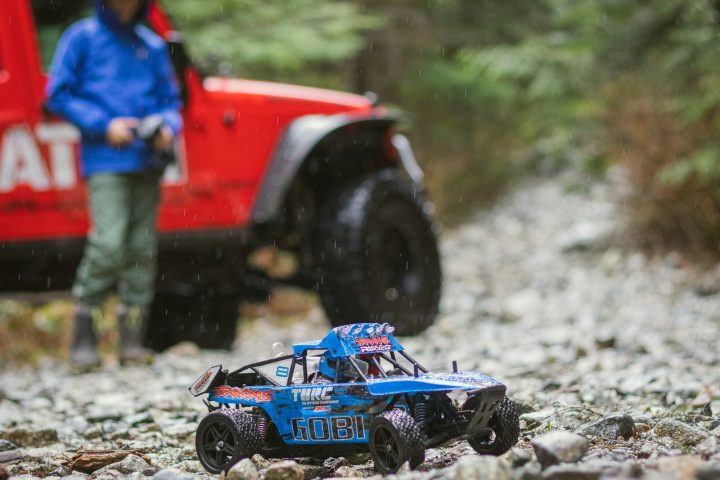
Grass swallows some RC cars whole, gravel eats others, and rain ends the day for the rest. This guide teaches you to read terrain like a pro — and match it to the machine that will actually thrive out there.
Here’s the mistake almost every newcomer makes: they buy the car first and discover the terrain second. Then the sleek street machine bogs down in the backyard, or the slammed drift car beaches itself on the first gravel path. The best outdoor remote control car #ad isn’t a single product — it’s the machine that matches the ground you’ll actually drive on most.
So this tutorial is built backwards from the way most guides work. Instead of listing cars and hoping one fits, we’ll teach you to read terrain the way experienced drivers do — grass, dirt, gravel, rocks, pavement, and weather — then match each surface to the vehicle type that owns it. You’ll learn what actually makes a car “outdoor-capable,” how to run your first session without breaking anything, and the post-run habits that decide whether your car lasts one season or ten.
In this guide
- Why outdoor RC is a different game
- Think terrain first, car second
- The outdoor vehicle types, decoded
- Toy-grade vs hobby-grade outdoors
- Grass and backyards
- Dirt, gravel, and park trails
- Rocks and rough trails: crawler country
- The terrain match-up matrix
- Weather: rain, puddles, mud, and snow
- Your first outdoor session, step by step
- Batteries, run time, and radio range
- The post-run ritual: cleaning and care
- Smart buying advice
- Common mistakes to avoid
- Pro tips from the field
- Frequently asked questions
🌍 Why outdoor RC is a different game
Indoors, an RC car lives in paradise: flat floors, zero dust, no water, nothing taller than a chair leg. Step outside and everything changes at once. The ground fights back — grass drags on the chassis, gravel pelts the underside, dirt works into bearings, and a single hidden sprinkler head can end a full-speed run instantly. Outdoor driving is harder on every component, which is exactly why it’s also more fun: real terrain, real consequences, real skill.
Three attributes separate cars that thrive outdoors from cars that merely survive a few sessions. Ground clearance determines whether the chassis floats over obstacles or plows into them. Tire choice determines grip — knobby, pin, or paddle treads bite loose surfaces where slick street tires spin helplessly. And sealed electronics determine whether morning dew, a puddle, or a surprise patch of mud is a non-event or a funeral.
The golden rule: outdoors, clearance and traction beat top speed every single time. A modest truck that keeps moving is infinitely faster than a rocket that’s stuck in the lawn.
🗺️ Think terrain first, car second
Here’s the easy method this whole tutorial hangs on — a single question that does ninety percent of the work: “Where will this car spend most of its life?” Not the dream terrain. Not the once-a-year trip. The boring, honest answer: your backyard, the park down the street, the gravel lot behind the office, the sidewalk out front.
Once you name that primary surface, the vehicle type almost picks itself, because every outdoor RC category is a specialist wearing light disguise. Monster trucks are grass machines. Short course trucks are dirt machines. Crawlers are rock machines. Buggies are smooth-dirt and hard-pack machines. Buy for your real terrain and the car feels brilliant; buy for an imaginary terrain and it feels broken — even when nothing is wrong with it.
A useful second question: “What’s the worst thing this car will hit?” If your park hides curbs, roots, and rocks, durability outranks speed. If it’s a wide-open dirt field, speed can climb the priority list. Terrain-first thinking isn’t just about traction — it’s about predicting impacts before you pay for them.
🚙 The outdoor vehicle types, decoded
Walk into the hobby and you’ll hear half a dozen category names thrown around like everyone was born knowing them. Here’s the translation table — what each type actually is, and the terrain it secretly specializes in.
| Type | What it is | Secret specialty |
|---|---|---|
| Monster truck | Tall truck, huge tires, big suspension travel | Grass, curbs, jumps — the backyard king |
| Short course truck | Race-truck body with tires tucked inside | Dirt lots and parks — forgiving and tough |
| Buggy | Low, light, agile open-wheeler | Smooth dirt and hard-pack — fast and precise |
| Truggy / stadium truck | Buggy chassis with truck tires and stance | Mixed surfaces — the all-rounder compromise |
| Rock crawler | Slow, geared-down 4×4 with extreme articulation | Rocks, roots, trails — walking-pace precision |
| On-road / street car | Low chassis, slick or treaded street tires | Pavement only — brilliant there, helpless elsewhere |
🎚️ Toy-grade vs hobby-grade outdoors
Outdoors is where the toy-grade vs hobby-grade gap stops being academic. Indoors, a toy car’s limitations barely show. Outside, they compound: less ground clearance, weaker motors that stall in grass, unsealed electronics that fear moisture, and — most importantly — no replaceable parts, so the first real impact can be the last.
Hobby-grade cars are built around the assumption that outdoor driving breaks things. Every component — suspension arms, drive shafts, servos, body shells — can be ordered and swapped with basic tools. The major brands (Traxxas, Arrma, Axial, Losi) win on exactly this: parts availability and a community that has already solved whatever problem you’ll hit next.
Quick test: before buying any “outdoor” RC car, search for its spare parts. If you can’t find replacement suspension arms for sale, the manufacturer doesn’t expect the car to survive outdoor driving either.
🌱 Grass and backyards
Grass is the most common outdoor surface and the most underestimated. Each blade is a tiny brake: it drags on the chassis, wraps around axles, and saps motor power continuously. The cars that win here are tall, torquey, and four-wheel drive — which is why the classic backyard machine is a 4×4 RC monster truck #ad: huge tires lift the chassis above the blades, and the drivetrain has torque to spare.
Reading your lawn matters too. Freshly mowed, dry grass drives almost like dirt. Ankle-high grass demands a genuinely tall truck. Wet grass adds drag and moisture — saved for sealed-electronics machines only. And the scale rule of thumb is simple: the bigger the car, the smaller the grass feels. A large-scale monster truck treats a lawn like carpet; a tiny 1/18 machine experiences the same lawn as a jungle.
Stadium trucks and truggies are the budget-friendlier grass option — lower than monster trucks but still tall enough for trimmed lawns, and usually faster. If your backyard doubles as a jump park (ramps, mounds, flower-bed gaps), suspension travel becomes the spec to care about: it’s what turns hard landings into entertainment instead of repair bills.
🏜️ Dirt, gravel, and park trails
Packed dirt is the sweet spot of outdoor RC — enough grip to corner, enough slip to slide, soft enough to forgive crashes. It’s the natural habitat of the short course truck #ad, whose full-fender body hides the wheels and shrugs off the side-swipes and rollovers that dirt driving guarantees. There’s a reason the short course truck is the most recommended first hobby-grade car in the world: it’s the friendliest teacher on the most forgiving classroom surface.
Gravel is dirt’s mean cousin. Loose stones act like ball bearings under the tires and become projectiles in the wheel wells — paint-stripping, gear-cover-rattling projectiles. It’s drivable and genuinely fun, but it accelerates wear: expect to clean stones from suspension pockets and check tire wear more often. Fender-covered trucks again beat open-wheel designs here.
For smooth, hard-packed dirt — baseball infields, BMX tracks, dry trails — the 4×4 buggy #ad is the precision instrument: low, light, and scalpel-accurate through corners. Just respect its limits — a buggy on a rutted, rocky trail is a fish on a bicycle.
🪨 Rocks and rough trails: crawler country
Some outdoor terrain can’t be rushed — boulder fields, root-laced forest trails, creek beds, steep banks. This is where the RC rock crawler #ad turns the entire hobby inside out: gearing traded for torque, speed traded for control, with soft sticky tires and suspension articulation that keeps all four wheels gripping surfaces that would high-center anything else.
Crawling is a different mental sport. You pick lines like a climber, creep at walking pace, and celebrate a clean ascent the way bashers celebrate a backflip. Scale trail trucks add realism to the formula — detailed bodies, portal axles for extra clearance on some models, even two-speed transmissions — and the modern small-scale crawlers are a brilliant gateway: small enough for a rainy-day living room course, capable enough for real outdoor rock gardens.
Honest match check: if your nearest “outdoors” is a hiking trail rather than an open field, a crawler will give you more driving joy per session than any speed machine — and it’s the type most welcome in shared public spaces, because it’s quiet and slow.
📊 The terrain match-up matrix
Here’s the whole tutorial compressed into one table. Find your primary surface on the left; the ratings tell you which machine belongs there.
| Terrain | Monster truck | Short course | Buggy | Crawler |
|---|---|---|---|---|
| Lawn / grass | Excellent | Good (short grass) | Weak | Fair (slow fun) |
| Packed dirt | Very good | Excellent | Excellent | Fair |
| Gravel | Very good | Very good | Fair | Good |
| Rocks / roots / trails | Fair | Weak | No | Excellent |
| Pavement / sidewalk | Good (tire wear) | Good | Very good | Fair (slow) |
| Sand / loose soil | Very good | Good | Fair | Good |
Notice what the matrix reveals: there’s no column of all-excellents. Every machine is a specialist. The closest thing to an all-rounder is the 4×4 monster truck or truggy — which is exactly why they dominate “first outdoor car” recommendations. Specialists reward drivers who know their terrain; all-rounders reward drivers who don’t yet.
🌧️ Weather: rain, puddles, mud, and snow
The single most misunderstood word in outdoor RC is “waterproof.” On most hobby-grade cars it means the electronics — receiver, servo, speed control, motor — are sealed against splashes, puddles, wet grass, mud, and snow. It does not mean the car is a submarine. Bearings, drivetrain metal, and fasteners are not sealed, and water that gets in carries grit with it.
So here’s the practical weather doctrine. Wet grass and light mud: fine on sealed cars, but plan a thorough dry-and-clean afterward. Puddles: splash through, don’t park in. Snow: one of the most fun surfaces in the hobby on a sealed 4×4 — cold drains batteries faster and melted snow is still water, so the post-run ritual matters double. Deep water and saltwater: never; salt in particular destroys electronics and corrodes everything it touches.
After any wet session: remove the battery first, shake and towel the chassis, blow water out of crevices, run the motor briefly to shed internal moisture, and leave the car opened up to air-dry completely before storage. A little post-rain discipline is the entire difference between “waterproof” being true and being a warranty argument.
🏁 Your first outdoor session, step by step
A first outdoor run decides a lot — your confidence, the car’s early wear, and whether the neighbors love or hate your new hobby. Run it like this and everything goes smoothly.
The first-session checklist
- Walk the ground first. Cross your driving area on foot and note sprinkler heads, roots, rocks, and holes. Five minutes of walking prevents the most expensive crashes — the ones into things you never saw.
- Charge everything, check everything. Full drive battery, fresh transmitter batteries, wheel nuts snug, body clips secure. Range-test the radio: walk the car’s full driving distance away and confirm steering still responds before you ever apply throttle.
- Start at half throttle. Most modern transmitters or speed controls offer a reduced-power training mode — use it. Learn the car’s turning radius, braking distance, and grip limits at sane speeds before unlocking the fireworks.
- Drive a big figure-eight. Ten minutes of figure-eights teaches throttle-steering balance in both directions — the core skill of all RC driving — far faster than random blasting does.
- Stop at the first sign of weakness. When steering gets lazy or acceleration fades, the battery is done. Running a pack to empty hurts it (and with rechargeable lithium packs, deep discharge genuinely damages them). End early, not late.
- Inspect while it’s dirty. Before cleaning, look the car over: dirt patterns show exactly where the chassis scrapes and which components take hits — free setup advice written in dust.
🔋 Batteries, run time, and radio range
Outdoor sessions live and die by battery logistics. Two chemistries dominate: NiMH packs are the forgiving starter option — tolerant of casual charging habits, cheaper, heavier, with softer power delivery. LiPo packs deliver noticeably stronger, more consistent power in a lighter package, but demand respect: a proper balance charger #ad, a fireproof charging bag, supervised charging, and storage-charge discipline between sessions.
| Factor | NiMH | LiPo |
|---|---|---|
| Power delivery | Softer, fades as it drains | Strong and consistent until low |
| Care required | Minimal — beginner friendly | Strict — balance charge, storage charge, charge bag |
| Weight | Heavier | Lighter — helps handling and jumps |
| Best for | First car, kids’ cars, casual use | Performance driving, experienced owners |
Two field-craft habits multiply your fun. First, bring more than one pack — outdoor sessions end when batteries do, and swapping a pack takes thirty seconds. Second, cold weather shortens run time; keep spare packs in an inside pocket in winter and they’ll deliver noticeably better.
Modern 2.4GHz radios comfortably out-range your eyesight — the practical limit outdoors is how far away you can still tell which way the car is pointing. The real range threats are terrain (the signal hates driving behind metal sheds and cars) and a dying transmitter battery, which shortens range before it kills it. Fresh AAs are the cheapest crash insurance in the hobby.
🧽 The post-run ritual: cleaning and care
Outdoor dirt is patient. Left on the car, it migrates into bearings, grinds inside gears, and abrades suspension pivots — invisible damage on a daily basis, dead components on a yearly one. The fix is a five-minute ritual after every session: battery out, body off, then a soft brush kit #ad over the chassis, suspension, and wheels, with compressed air for the crevices a brush can’t reach.
While brushing, do the thirty-second health check: spin each wheel (gritty rumble means a bearing wants attention), wiggle each wheel (clunky play means a loose nut or worn pivot), and glance at the spur gear for embedded stones. Caught now, each of these is a trivial fix; ignored, each becomes a drivetrain rebuild.
Weekly-ish, go one level deeper: check screw tightness around the motor mount and shock towers (vibration loosens them), inspect tire wear and glue seams, and confirm shock shafts are clean. Outdoor cars don’t die of crashes nearly as often as they die of neglect — the ritual is what keeps yours in the first category.
🧠 Smart buying advice
Apply the terrain-first method and the buying decision collapses into three checks. One: match the type to your honest primary surface using the matrix above. Two: verify what’s in the box. “Ready to run” should mean car, transmitter, battery, and charger — many performance models ship without battery and charger, which is fine, just budget for quality ones rather than treating them as an afterthought.
Three: buy the brand with parts, not the listing with adjectives. Unbranded “high-speed off-road” cars at suspiciously friendly prices are disposable by design — no spares, no support, no upgrade path. A hobby-grade truck from a major brand costs more upfront and dramatically less per year of fun, because every broken part is a small order instead of a new car. Start with sealed electronics, 4WD if grass is in your life, and a training-mode-capable speed control — then spend your first month driving, not shopping.
🚫 Common mistakes to avoid
- Buying for imaginary terrain. The dune buggy for a beach you visit yearly, parked 360 days while your lawn defeats it. Buy for the ground outside your door.
- Treating “waterproof” as “submersible.” Sealed electronics survive splashes and snow — drivetrains still ingest gritty water. Splash through, never soak, always dry after.
- Full throttle on day one. Speed without car-control skill is just a faster route to the repair bench. Training mode exists because the manufacturers watched thousands of first days.
- Skipping the radio range check. A car that drives out of control range keeps going until something stops it. Test range on foot before every new location.
- Storing the car dirty. Grit left overnight migrates into bearings and gears. The five-minute brush-down is maintenance; skipping it is a slow-motion teardown.
- Careless lithium battery habits. Charging unattended, storing packs full, running them dead, ignoring a puffed pack — every one is a known, avoidable failure. Charge supervised, store at storage charge, retire damaged packs.
💡 Pro tips from the field
- Build a field bag. Spare packs, fresh AAs, wheel wrench, body clips, small pliers, and a towel. Ninety percent of session-ending problems are fixed by something in that bag.
- Drive at the same place twice. Repeating a location teaches lines, grip, and hazards — skills compound at familiar spots and reset at new ones.
- Chase the dew schedule. Morning grass is wet even on sunny days. Afternoon sessions are kinder to electronics and bearings alike.
- Learn to drive toward yourself. Steering reverses visually when the car faces you — the skill that separates smooth drivers from confused ones. Practice slow laps facing inward.
- Respect shared spaces. Yield to pedestrians and dogs, keep distance from picnics, and pick quiet hours. Every courteous session keeps a park RC-friendly.
- Photograph your setup. Before adjusting suspension or gearing, photograph the stock settings — the known-good baseline you can always return to.
❓ Frequently asked questions
Can RC cars get wet?
Many hobby-grade cars have sealed, splash-resistant electronics that handle wet grass, puddles, mud, and snow. None are submarines: avoid deep water and saltwater entirely, and dry the car thoroughly after every wet run.
What’s the best outdoor RC car for a beginner?
For most people, a 4×4 monster truck or short course truck from a major brand: tall enough for grass, tough enough for crashes, with training modes and full spare-parts support. Match the final choice to your primary terrain.
Is 4WD worth it outdoors?
Usually yes. Four driven wheels transform grass, loose dirt, and wet surfaces from a struggle into easy progress, and they make the car far more forgiving to drive. 2WD is lighter, cheaper, and teaches throttle control — a fine choice for smooth dirt and pavement.
Can I drive an RC car on grass?
Yes — with the right machine. Grass drags on small, low cars, so choose a tall 4×4 monster truck or truggy with big tires, and remember: the shorter and drier the grass, the easier the driving.
NiMH or LiPo battery for outdoor driving?
NiMH for beginners and kids — cheaper and tolerant of casual habits. LiPo for stronger, more consistent power once you’re ready to follow strict charging, storage, and safety routines, including supervised charging in a fireproof bag.
How do I clean my RC car after a muddy run?
Battery out and body off first. Brush away loose dirt, wipe mud with a damp cloth, use compressed air on crevices, and avoid hosing the car down — pressurized water pushes grit into bearings. Dry completely before storage.
🏁 Final thoughts
- Outdoor RC success starts with one question: where will the car actually drive? Terrain first, car second — always.
- Every vehicle type is a specialist: monster trucks own grass, short course trucks own dirt, buggies own hard-pack, crawlers own rocks.
- Outdoors, clearance, traction, and sealed electronics beat raw speed — and hobby-grade parts support beats everything.
- “Waterproof” means splash-proof: enjoy wet grass and snow on sealed cars, then dry and clean religiously.
- The five-minute post-run ritual and sane battery habits are what turn one season of fun into a decade of it.
Browse outdoor RC cars on Amazon →
#ad — as an Amazon Associate we earn from qualifying purchases.
Keep exploring
This article contains affiliate links. As an Amazon Associate, we earn from qualifying purchases made through links on this page, at no additional cost to you.
All brand and product names mentioned, including Traxxas, Arrma, Axial, and Losi, are trademarks of their respective owners; their use here is for identification purposes only.

admin
Our editors are RC drivers first: every guide is written by someone who has owned, broken and rebuilt the category they cover. No paid placements, no fabricated ratings.