Best LEGO RC cars

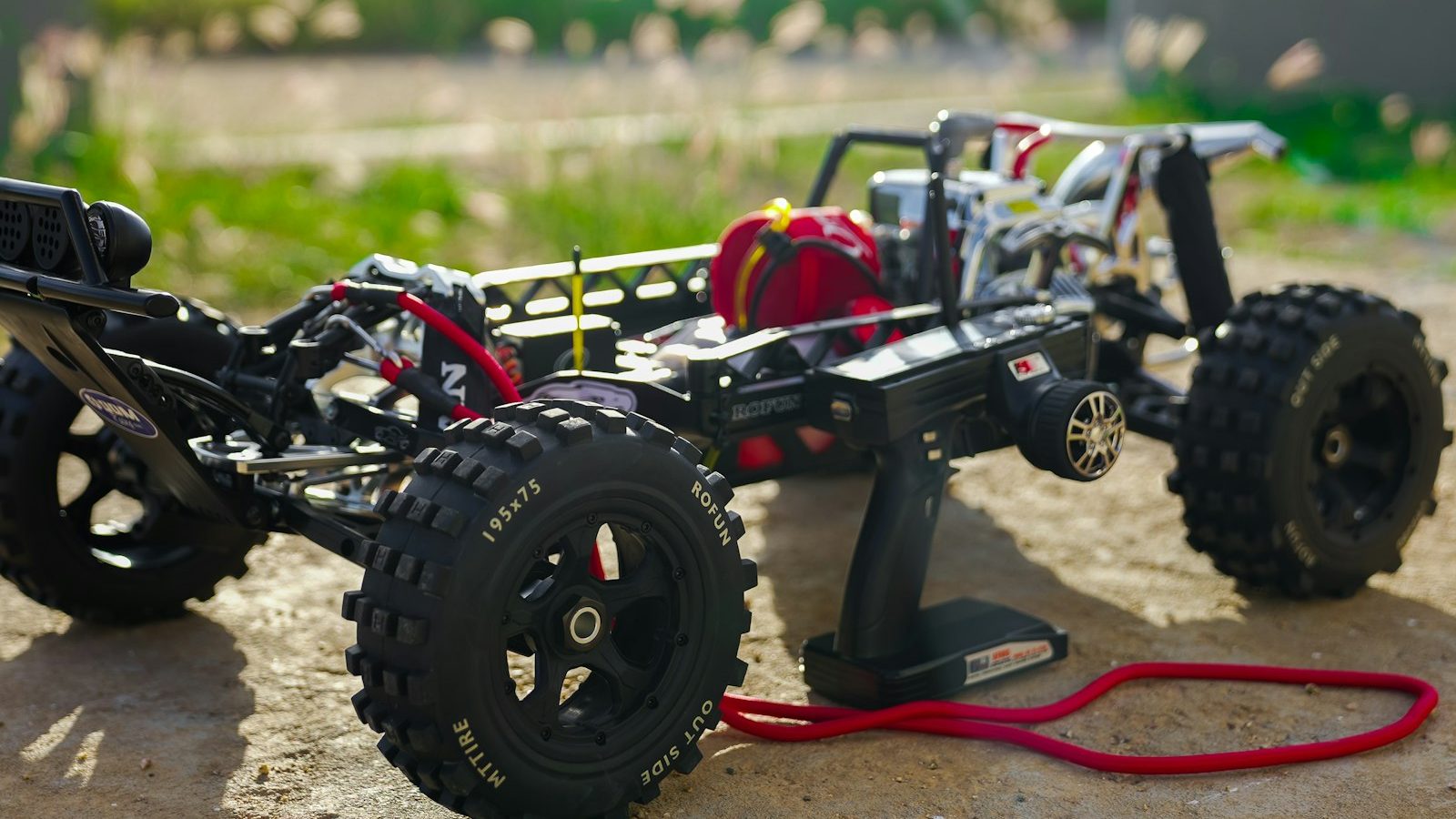
Photo: @brianjtromp via Unsplash
In this article
Affiliate disclosure: As an Amazon Associate, RemoteControlCarsBlog may earn from qualifying purchases.
Brick-built RC · Buyer’s guide
Best LEGO RC cars: kits, reviews, and how to pick the set your family will actually drive
Build it brick by brick, then grab the controller — every LEGO remote-control system explained, plus the standout kits to buy now and the retired legends worth hunting.
There’s a particular kind of joy in driving a car you built with your own hands — and that’s exactly what the best LEGO RC car #ad kits deliver. Unlike a ready-to-run hobby car that comes alive the moment you drop in batteries, a brick-built RC machine makes you earn the first drive. You assemble the gearbox, route the cables, seat the motors, and understand — really understand — why the thing moves before it ever turns a wheel.
But the LEGO remote-control world is more confusing than it looks. Three different control systems span two decades of sets, some kits steer with an app while others use a handheld transmitter, and several of the most-loved models are retired. This guide untangles it all: how each system works, which current kits are worth your money, which retired sets justify the hunt, and how to keep everything running once it’s built.
⚠️ Read this before you buy for a child
Motorized LEGO Technic sets are generally aimed at builders ages 9–10 and up — always check the box. Every set contains small parts that are a choking hazard for children under 3. Younger builders do best with adult supervision, and battery installation and charging is an adult’s job: correct cell types only, never mix old and new, never leave charging packs unattended. These kits are for every kind of builder — kids and grown-ups alike.
📑 What’s in this guide
- Why LEGO RC cars are a category of their own
- The three LEGO control systems, explained
- How to choose the right kit
- LEGO Technic Porsche GT4 e-Performance (42176)
- LEGO Technic Audi RS Q e-tron (42160)
- Retired legends worth hunting
- App-Controlled Batmobile (76112) for younger builders
- Head-to-head comparison table
- Inside the CONTROL+ app experience
- Motorize your own LEGO car
- Battery & charging safety
- Maintenance
- Where (and where not) to drive
- Smart buying: retired sets & clones
- Common mistakes & pro tips
- FAQ
🧱 Why LEGO RC cars are a category of their own
A LEGO RC car sits in a strange and wonderful middle ground. It isn’t a hobby-grade machine — it won’t survive a curb jump, isn’t waterproof, isn’t built for speed runs. But it also isn’t a toy-store impulse buy driven twice and forgotten. It’s a working machine you assemble yourself, with real differentials, real suspension geometry on the bigger sets, and drivetrains you can open up, study, and rebuild.
That changes the entire ownership experience. When a hobby RC car breaks, you order a replacement part. When a LEGO RC car “breaks,” a few bricks have popped loose — press them back on and drive again. Bored of it? Tear it down and build something new from the same motors and hub. The electronics are a reusable platform, not a sealed appliance — the single most underrated thing about these sets.
💡 The mental model: think of a LEGO RC set as a driving experience plus an engineering course plus a parts library. If you judge it only as a remote-control car, you’ll find faster options. If you judge it as all three, very little competes.
🎛️ The three LEGO control systems, explained
Almost every point of confusion in this hobby traces back to one fact: LEGO has used three distinct remote-control systems over the years, and sets from different eras don’t behave the same way. Before you compare individual kits, get these straight.
1. Classic RC (early 2000s). The original radio-frequency system with a screw-in antenna and a true handheld transmitter. Radio rather than infrared means it works fine in bright sunlight. These sets are long retired and collectible, but they established the formula: dedicated drive motor, dedicated steering, physical controller.
2. Power Functions (roughly 2007–2019). A modular system of motors, battery boxes, and infrared receivers, controlled by a small IR remote with two control wheels. The catch: infrared struggles in direct sun, so these cars are happiest indoors or in shade. The upside is modularity — the components clip into anything, which made this the golden era for motorizing your own creations.
3. Powered Up / CONTROL+ (2018–present). The current generation. A Bluetooth smart hub sits in the model, motors plug into it, and your phone becomes the controller through the free CONTROL+ app, with a custom on-screen interface per set. Bluetooth means sunlight is no longer a problem. The trade-off: you’re handing a child your phone, and there’s no physical controller in the box.
| System | Era | Controller | Works in sunlight? | Best for |
|---|---|---|---|---|
| Classic RC | Early 2000s | Radio handheld | ✅ Yes | Collectors |
| Power Functions | ~2007–2019 | Infrared handheld | ⚠️ Indoors/shade only | Tinkerers, custom builds |
| Powered Up / CONTROL+ | 2018–now | Smartphone app (Bluetooth) | ✅ Yes | Current sets, families |
🧭 How to choose the right kit
Forget piece counts for a moment. The right kit comes down to three honest questions about who’s building it and how it will actually be used.
Who’s building? A confident 10-year-old can complete a mid-size Technic RC build over a weekend with light help. A younger child needs a simpler set like the Batmobile, or a parent building alongside. An adult looking for a meaty project should lean toward the larger CONTROL+ sets, where the build itself is half the value.
Where will it drive? Smooth indoor floors suit almost any set. Carpet eats small-wheeled models. Grass, gravel, and dirt demand ground clearance and big tires — an off-road style set, not a low racer. Be brutally honest about your terrain; it’s the number-one predictor of whether the car keeps getting driven after week one.
Phone or no phone? All current sets are app-controlled. If you want screen-free play, your routes are retired Power Functions sets on the secondary market or building your own with a third-party physical controller — both covered later in this guide.
“The best set isn’t the biggest one — it’s the one that matches your floor, your builder, and your patience. A small kit that gets driven every day beats a flagship that sits on a shelf.”
🏁 LEGO Technic Porsche GT4 e-Performance (42176)
If you want the sharpest driving experience in the current lineup, this is it. The Porsche GT4 e-Performance #ad is a replica of Porsche’s all-electric race car, billed by LEGO as the fastest model in the CONTROL+ range to date. Aimed at ages 10 and up, it’s a focused track machine: low, wide, and built around responsive app steering rather than rock-hopping suspension.
The build teaches you how a performance drivetrain goes together — fitting, since the real GT4 e-Performance is itself a battery-powered race car. As a first “serious” Technic RC set for a motorsport-mad kid or returning adult builder, it’s the easiest recommendation on this page. Just respect its limits: smooth hard surfaces are home. Driveways and gym floors — yes. Gravel and lawn — no.
✅ Pick this if: you want the most modern, fastest-feeling LEGO RC experience, you drive on smooth surfaces, and the licensed race-car look matters to you.
🌵 LEGO Technic Audi RS Q e-tron (42160)
The Audi RS Q e-tron #ad takes the opposite approach: it’s modeled on Audi’s hybrid rally-raid racer, built to cross deserts. Also graded ages 10 and up, it pairs app-controlled drive and steering with a chunkier, raised rally stance — noticeably more tolerant of imperfect floors, thresholds, and rugs than the low-slung racers.
It’s also a build with a story — the real RS Q e-tron is an engineering oddball (an electric drivetrain fed by an onboard energy converter), and the model leans into that identity. Between the Porsche and the Audi there’s no wrong answer: the Porsche edges it on pace and track feel, the Audi on versatility and character. Pick by personality, not spec sheet.
🪨 Retired legends: X-treme Off-Roader, Stunt Racer, Tracked Racer & Top Gear Rally Car
X-treme Off-Roader (42099). A launch set for CONTROL+ and, for many builders, still the best pure driver LEGO has made. At just under a thousand pieces, the X-treme Off-Roader #ad builds into a rock-crawler-style 4×4 with tall ground clearance, deep-tread tires, and real working suspension — the only car here that genuinely handles grass and pebbles. If outdoor driving is your priority, it’s worth the secondary-market hunt; nothing current matches it on rough ground.
Remote-Controlled Stunt Racer (42095). A Power Functions machine with two big rear wheels and a personality to match — it spins on the spot, pops wheelies, and shrugs off abuse. Its true physical infrared remote makes it one of the best screen-free options ever made; the IR limitation makes it an indoor machine.
RC Tracked Racer (42065). The Stunt Racer’s older sibling, a twin-tread racer that steers like a tank by varying track speed — a brilliant first lesson in differential steering, with 2-in-1 instructions for a second model.
App-Controlled Top Gear Rally Car (42109). The CONTROL+ rally car built in partnership with the TV show, with an XL motor and an L motor managed by the smart hub, intuitive app steering, and sound effects through your phone. Retired and often expensive, but beloved for how planted it feels at speed on hard floors.
💡 Secondary-market rules of thumb: a complete used set with verified, tested electronics usually beats a sealed box at collector pricing if you intend to drive it. And for any retired app-controlled set, you’re betting on continued app support for an out-of-production model — check recent buyer feedback on app compatibility before paying a premium.
🦇 The App-Controlled Batmobile (76112) for younger builders
Not every brick RC car needs to be a thousand-piece Technic project. The App-Controlled Batmobile #ad is a 321-piece set built on the Powered Up Bluetooth hub, with a mini Batman figure to ride along. The build is approachable for younger kids with a parent nearby, the superhero theme does the motivational heavy lifting, and the app connection is the same simple Bluetooth pairing as the big Technic sets.
As a first remote-control build it hits a sweet spot: short enough to finish in an afternoon, exciting enough to drive for months — and its standard Powered Up hub and motor become spare parts for future custom builds. It’s retired, so expect marketplace pricing. For licensed character sets like this, double-check the age grading on the box and keep the small accessories away from children under 3.
📊 Head-to-head: which LEGO RC car fits you?
| Set | System | Status | Best surface | Ideal builder |
|---|---|---|---|---|
| Porsche GT4 e-Performance (42176) | CONTROL+ | ✅ Current | Smooth hard floors | Speed-focused, 10+ |
| Audi RS Q e-tron (42160) | CONTROL+ | ✅ Current | Mixed indoor | All-rounder, 10+ |
| X-treme Off-Roader (42099) | CONTROL+ | 🔁 Retired | Outdoors, rough ground | Off-road fans |
| Stunt Racer (42095) | Power Functions | 🔁 Retired | Indoors (IR remote) | Screen-free play |
| Top Gear Rally Car (42109) | CONTROL+ | 🔁 Retired | Smooth hard floors | Rally fans, collectors |
| App-Controlled Batmobile (76112) | Powered Up | 🔁 Retired | Indoors | Younger builders + parent |
📱 Inside the CONTROL+ app experience
Because every current set depends on it, the CONTROL+ app deserves a closer look before you buy. The app is free, and each supported set gets a dedicated, custom-built control screen — not one generic joystick layout reused everywhere. Depending on the model you’ll find one-touch driving modes, layouts that separate throttle and steering, and feedback readouts from the hub’s sensors. Sound effects play through the device, which kids adore and parents learn to mute.
A few practical realities: initial connection requires downloading the app and the set’s control profile, so do setup on home Wi-Fi before the big unveiling. Bluetooth range is generous indoors, but your phone’s battery becomes part of the equation. And because the controller is software, LEGO can refine control schemes over time — the flip side being the app-support dependency we flagged for retired sets.
🔧 Motorize your own: turning any LEGO car into an RC car
Here’s the move most guides skip entirely: you don’t need an official RC set to own a LEGO RC car. The Powered Up hub and motors #ad are sold as components, which means any Technic car you already own — or any original creation — can be converted into a driver. This is where the hobby gets genuinely deep, and it’s the cheapest path in if you already have a brick collection.
The basic recipe for a first conversion looks like this:
🔩 First conversion in five steps
- Pick a donor chassis with space for the hub low and central — weight placement decides handling.
- Mount one motor for drive, geared down slightly so the car has torque to actually move its own weight.
- Mount a second motor for steering linked to the front axle — a simple rack-and-pinion linkage from Technic gears works beautifully.
- Pair the hub with the Powered Up app and assign each motor to a control channel.
- Test, observe, rebuild. Your first version will be too heavy or too tall. That’s the point — iteration is the actual hobby.
Custom building is also the answer for families who want a physical controller instead of a phone: the wider Powered Up ecosystem and compatible third-party handsets open that door, and community instructions for proven custom RC chassis are easy to find. One ground rule for kids’ builds: a parent handles the hub’s batteries and vets any third-party electronics for proper safety certification first.
🔋 Batteries, charging, and power done safely
Every LEGO RC car is a battery-powered device, and batteries are the one part of this hobby where casualness has real consequences. The standing rule in any household: adults install, swap, and charge batteries — full stop. Battery compartments are screwed shut for a reason, and that reason is small children.
Beyond that rule, a few habits keep the hobby cheap and safe. Most hubs run on standard AA or AAA cells, and a motorized model is hungry — a set of quality rechargeable AA batteries #ad pays for itself within weeks of regular driving. Follow the basics religiously:
- Never mix old and new cells, or different brands/chemistries, in one compartment — mismatched cells stress each other and can leak.
- Charge rechargeables in a proper charger, on a hard non-flammable surface, never unattended or overnight.
- Remove batteries before storing a model for more than a few weeks; a leaked cell can ruin a hub worth far more than the batteries.
- Sluggish motors and dropped Bluetooth connections are almost always low batteries, not a broken set. Swap cells before troubleshooting anything else.
🧼 Maintenance: keeping a brick car driving like day one
The good news: a LEGO RC car needs almost none of the maintenance a hobby RC car demands. No oil, no shock fluid, no tire glue. But three habits separate cars that run for years from cars that quietly die in a closet.
Keep the drivetrain clean. Hair, carpet fibers, and pet fur wrap around axles and inside gear housings, adding friction the motors must fight. Every few sessions, flip the car over and clear the axles — tweezers reach where fingers can’t. A car that drives slower than it used to on fresh batteries almost always has fiber wrap.
Re-seat before you panic. Brick connections work loose under vibration, especially around motor mounts and steering linkages. Clicking, skipping gears, or vague steering usually means a connector has lifted half a stud somewhere. Press the suspect area firmly back together; nine times out of ten, that’s the whole repair.
Store it smart. Keep the model out of direct sunlight (UV fades bricks and ages tires), remove batteries for long storage, and dust electronics with a dry cloth only. Never run any LEGO electric component through water, and never drive through puddles or wet grass — hubs and motors are not sealed against moisture.
🛣️ Where (and where not) to drive a LEGO RC car
Surface choice does more for your enjoyment than any upgrade. These machines have plastic tires driven by compact motors — match the terrain to the car and everything feels great; mismatch it and even a flagship feels feeble.
| Surface | Street-style sets | Off-road-style sets | Notes |
|---|---|---|---|
| Hardwood / tile | ✅ Excellent | ✅ Good | The ideal arena for most sets |
| Low carpet | ⚠️ Sluggish | ✅ Fine | Watch for fiber wrap on axles |
| Smooth concrete / driveway | ✅ Good | ✅ Excellent | Avoid grit patches; dust the car after |
| Grass / gravel / dirt | ❌ Avoid | ⚠️ Crawler-style only | High clearance + big tires required |
| Wet anything | ❌ Never | ❌ Never | Electronics are not water-resistant |
One more note for Power Functions owners: infrared remotes lose the plot in direct sunlight, so plan retired-set sessions indoors or in solid shade. Bluetooth CONTROL+ sets don’t care about sun at all — only about moisture and grit.
🛒 Smart buying: retired sets, clone kits, and real value
A few buying realities the product pages won’t tell you. On pricing: motorized sets cost meaningfully more than static kits of the same size because you’re paying for the hub, motors, and licensing. Check current prices at retailers rather than trusting any blog’s quoted numbers — they move constantly, and retired sets swing hardest of all.
On clone kits: marketplaces overflow with third-party “compatible” RC building kits at tempting prices. Some are decent, but quality control, electronics safety certification, and parts precision vary wildly — and for a child’s toy, certified electronics are non-negotiable. If you buy third-party, vet the seller and confirm safety certification for your region.
On value: think in cost-per-hour, not sticker price. A motorized Technic set delivers a long build, months of driving, a B-model rebuild, and a reusable electronics platform. Measured that way, the flagships are excellent value — and the component route (a hub, two motors, and bricks you already own) is the best value of all.
🚫 Common mistakes & pro tips
❌ Mistakes that kill the fun
- Buying a street racer for a carpeted house. Surface mismatch is the #1 reason these cars stop getting driven.
- Rushing the gearbox steps. A gear seated one stud off means a car that grinds or barely moves — and a teardown to find it. Build the drivetrain slowly and test motors when prompted.
- Driving an IR set in sunshine. Power Functions remotes use infrared; bright sun swamps the signal and the car “ignores” you.
- Leaving batteries in stored models. Leaked cells corrode contacts and destroy hubs.
- Paying sealed-collector prices to drive a retired set. A tested, complete used copy drives identically for far less.
✅ Pro tips that level you up
- Sort parts into bowls by step range before building — it halves build time and prevents the “missing piece” panic.
- Set up the app and pair the hub before gifting. Christmas-morning Bluetooth troubleshooting is nobody’s tradition.
- Build a slalom course from spare bricks. Driving skill, not top speed, is where the long-term fun lives.
- Photograph the model before any modification so you can always rebuild back to stock.
- Keep the boxes and instructions. Retired motorized sets hold value best when complete.
❓ FAQ: LEGO RC cars
What is the best LEGO RC car right now?
For most builders, the Technic Porsche GT4 e-Performance (42176) — LEGO’s fastest CONTROL+ model and a satisfying build for ages 10 and up. For more versatility across household surfaces, the Audi RS Q e-tron (42160) is the better all-rounder.
Do LEGO RC cars come with a physical remote control?
Current sets don’t — they’re controlled through the free CONTROL+ or Powered Up apps over Bluetooth. Physical remotes shipped with older Power Functions sets like the Stunt Racer (42095), now retired and sold on the secondary market.
What age are LEGO RC cars suitable for?
Most motorized Technic sets are graded around ages 9–10 and up; simpler sets like the Batmobile suit younger builders with adult help. All sets contain small parts unsafe for children under 3, and an adult should always handle batteries.
Can LEGO RC cars drive outside?
Crawler-style sets with high clearance and big tires — like the retired X-treme Off-Roader — handle grass, gravel, and dirt well. Street racers should stay on smooth, dry, hard surfaces. No LEGO RC car should ever touch water, sand, or mud — the electronics aren’t sealed.
Can I turn a regular LEGO set into an RC car?
Yes — Powered Up hubs and motors are sold as components, so any Technic chassis (or your own creation) can be motorized with one drive motor, one steering motor, and the app. It’s the cheapest entry path if you already own bricks.
Are retired sets like the Top Gear Rally Car still worth buying?
They can be, if you buy to drive rather than collect: a complete, tested used copy is far better value than a sealed box at collector pricing. Before paying a premium for any retired app-controlled set, confirm via recent buyer feedback that the companion app still supports it.
🏆 Final thoughts
The five things to remember:
- A LEGO RC car is three products in one — build project, driving toy, and reusable electronics platform.
- Know your control system: current sets are Bluetooth app-controlled; physical-remote sets are retired Power Functions models that struggle in sunlight.
- Match the set to your surface — Porsche GT4 for smooth-floor speed, Audi RS Q e-tron for mixed indoor terrain, a crawler for the backyard.
- Safety basics are non-negotiable: respect age grading, keep small parts from under-3s, supervise young builders, and let adults handle all batteries.
- The component route — a hub, two motors, and your existing bricks — is the most affordable and most educational way into the hobby.
🧱 Shop LEGO Technic RC sets on Amazon →
#ad — As an Amazon Associate we earn from qualifying purchases.
🔎 Keep exploring
Disclosure: remotecontrolcarsblog.com is a participant in the Amazon Services LLC Associates Program. Links marked #ad are affiliate links; we may earn a commission from qualifying purchases at no extra cost to you. Availability and pricing change frequently — always confirm on the retailer’s page.
Trademark note: LEGO® is a trademark of the LEGO Group, which does not sponsor, authorize, or endorse this site. Porsche, Audi, Batman, Top Gear, and other brand names are trademarks of their respective owners and are used here for identification purposes only.

admin
Our editors are RC drivers first: every guide is written by someone who has owned, broken and rebuilt the category they cover. No paid placements, no fabricated ratings.