How RC Cars Work


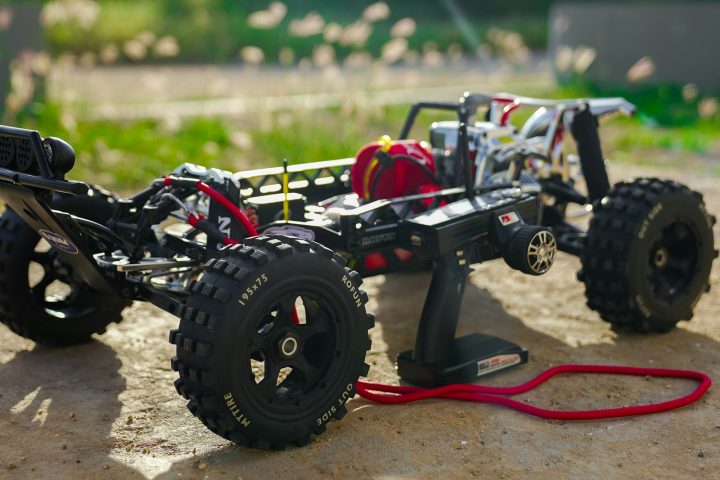
Photo: @maria0701 via Unsplash
In this article
Affiliate disclosure: As an Amazon Associate, RemoteControlCarsBlog may earn from qualifying purchases.
Ever wondered what actually happens when you pull the trigger and your RC car zooms off? It’s a clever little team of radio, electronics, and motors working together. Here’s exactly how it all works — no jargon required.
An RC car See RC cars on Amazon #ad can feel like magic — you twitch a trigger and the car responds instantly from across the yard. But it’s really a tidy chain of parts, each doing one job and passing the message along.
In this guide we’ll meet every component, follow a single command from your finger to the wheels, and explain the clever bits like radio signals and steering. By the end, you’ll understand your car inside and out. Let’s pop the hood. ⚙️
📋 What’s Inside (Table of Contents)
🗺️ The Big Picture
At its heart, an RC car is a simple team effort. You hold a transmitter (the controller) that sends radio signals through the air. Inside the car, a receiver catches those signals and passes instructions to two things: the ESC (which controls speed) and the servo (which controls steering).
The ESC draws power from the battery and feeds it to the motor, which spins the wheels through the drivetrain. The servo nudges the front wheels left or right. Put simply: your hands talk to the radio, the radio talks to the electronics, and the electronics make the car go and turn. Everything else is just the details.
Think of it like your own body: the transmitter is your voice, the receiver is the car’s ears, the ESC and servo are its muscles, the battery is its energy, and the drivetrain is its legs. Each part has one clear job. ⚙️
🧩 The Key Components
That’s the whole cast. Notice how each part hands off to the next — no single piece does everything, which is exactly why the system is so reliable and easy to repair or upgrade. See RC car parts on Amazon #ad
📡 How a Command Travels
Here’s what happens in the blink of an eye when you pull the throttle:
All of this happens almost instantly and continuously, dozens of times a second, which is why the car feels so responsive. Now let’s look at each part in a little more detail.
🎮 The Transmitter (Your Controller)
The transmitter is the handset you hold. Most RC cars use a pistol-grip design with a trigger for throttle (pull for forward, push for brake/reverse) and a wheel for steering, though some use dual sticks. When you move a control, the transmitter converts that movement into a radio signal and beams it to the car.
On hobby-grade cars, the control is proportional: how far you pull the trigger determines how much throttle you get, and how far you turn the wheel sets how sharply it steers — just like a real car. Many cheap toy-grade cars are non-proportional, meaning controls are basically on or off, with no in-between.
📥 The Receiver (The Car’s Ears)
Tucked inside the car, the receiver is a small electronic board with an antenna whose job is to listen for the transmitter’s radio signals. When it catches a signal, it decodes your commands and passes them on to the right components — throttle instructions to the ESC, steering instructions to the servo.
The transmitter and receiver are “bound” (paired) to each other so your car only responds to your controller, not someone else’s nearby. The receiver is the crucial translator between the radio waves in the air and the electronics that actually do the work.
🔌 The ESC (Speed Brain)
The Electronic Speed Controller, or ESC, is the component that controls how much power reaches the motor. Based on the throttle signal from the receiver, it regulates the flow of electricity from the battery to the motor — a little for gentle speed, a lot for full throttle — and also handles braking and reverse.
Think of it as both the brain and the muscle for speed: it makes the decision and delivers the power. Many ESCs also include a built-in circuit (a BEC) that supplies power to the receiver and servo, so they don’t need a separate battery. The ESC is matched to the motor and battery for safe, smooth performance. See RC ESCs on Amazon #ad
⚡ The Motor & Battery
The motor is where electricity becomes motion. When the ESC sends it power, the motor spins, and that spinning is what ultimately drives the wheels. RC motors come in two main types: brushed (simpler and beginner-friendly) and brushless (faster, more efficient, and more powerful). The motor type is a big factor in how a car performs.
The battery is the energy source that powers everything — motor, receiver, servo, and ESC. Common types are NiMH (durable and beginner-friendly) and LiPo (lighter, more powerful, but needing careful handling). Battery voltage and capacity affect both speed and run time, so the battery is a key part of the whole system. See RC batteries on Amazon #ad
↔️ The Servo & Steering
Steering is handled by a servo — a compact motor designed to rotate precisely to a commanded position rather than spin continuously. When you turn the wheel on your transmitter, the receiver tells the steering servo how far to move, and the servo turns to match.
The servo connects to the front wheels through a set of steering linkages (small rods and arms). As the servo rotates, it pushes and pulls these linkages, which pivot the front wheels left or right. Because hobby-grade steering is proportional, a small turn of the wheel gives a gentle turn, and a big turn gives a sharp one — precise and intuitive control.
⚙️ The Drivetrain
The motor spins fast, but that spinning needs to reach the wheels in a usable way — that’s the drivetrain’s job. It uses gears, driveshafts, differentials, and axles to transfer the motor’s power to the wheels, adjusting the speed and force along the way so the car drives smoothly.
Cars come in 2WD (power to two wheels, usually lighter and simpler) and 4WD (power to all four wheels, with more traction and control, great for off-road). The differential lets wheels spin at different speeds when cornering. The drivetrain is what turns the motor’s raw energy into the car actually rolling across the ground.
📶 Radio & 2.4GHz
The whole system relies on radio communication between transmitter and receiver. Most modern RC cars use 2.4GHz radio, which is a big upgrade over the older 27MHz and 49MHz systems. The key benefit is that 2.4GHz automatically manages channels, so multiple cars can run together without their signals clashing — no more swapping crystals or worrying about frequency conflicts.
This reliable link is what makes the car feel like an extension of your hands — the signal travels continuously, keeping the car doing exactly what you tell it, moment to moment.
🔥 Electric vs. Nitro Power
Everything so far describes a typical electric car. Nitro cars work similarly for steering and radio, but replace the electric power system with a fuel-burning engine. Here’s how the two differ:
In a nitro car, a small servo opens and closes the engine’s carburetor to control speed, and a separate battery powers the receiver and servos. The radio, receiver, and steering all work the same way — only the “engine room” is different.
⚠️ Common Misconceptions (Cleared Up)
Myth 1: The controller powers the car.
No — the car’s own battery powers it. Reality: The transmitter only sends signals.
Myth 2: The receiver and ESC are the same thing.
They’re separate. Reality: The receiver listens; the ESC controls the motor.
Myth 3: The motor steers the car.
It doesn’t. Reality: A separate servo handles steering.
Myth 4: All RC cars have proportional control.
Many toy-grade ones don’t. Reality: Cheap cars are often just on/off.
Myth 5: Any controller works with any car.
They must be bound/compatible. Reality: The transmitter and receiver are paired.
🔥 Why Understanding It Helps
- Easier troubleshooting. Knowing each part helps you find what’s wrong fast.
- Smarter upgrades. You’ll know what a new motor, ESC, or battery actually changes.
- Better buying decisions. You can read specs and tell hobby-grade from toy-grade.
- More confident repairs. Replacing a part is far less daunting when you understand it.
- More fun. Understanding the magic somehow makes it even more enjoyable.
❓ Frequently Asked Questions
How does an RC car receive commands?
Your transmitter converts your trigger and steering movements into radio signals and beams them through the air. A receiver inside the car, with its own antenna, catches and decodes those signals, then passes the instructions to the ESC for speed and the servo for steering. The transmitter and receiver are bound together so your car only responds to your controller, giving you reliable, interference-free control.
What does the ESC do?
The Electronic Speed Controller regulates how much power flows from the battery to the motor, based on the throttle signal from the receiver. It controls speed, braking, and reverse, acting as both the brain and the muscle for the car’s motion. Many ESCs also include a circuit that powers the receiver and servo. It’s matched to the motor and battery for smooth, safe performance.
How does an RC car steer?
Steering is handled by a servo, a small motor that rotates precisely to a commanded position. When you turn the wheel on your transmitter, the receiver tells the steering servo how far to move. The servo connects to the front wheels through steering linkages, small rods and arms, and as it rotates it pivots the front wheels left or right, giving you smooth, proportional control on hobby-grade cars.
What’s the difference between the motor and the ESC?
The motor is what physically spins to drive the wheels, turning electrical energy into motion. The ESC is the controller that decides how much power the motor receives, based on your throttle input, and manages braking and reverse. In short, the ESC is the controller and the motor is the doer. They work as a matched pair, with the ESC feeding the motor regulated power from the battery.
Why do most RC cars use 2.4GHz?
2.4GHz radio automatically manages channels, so many cars can run together without their signals interfering, unlike older 27MHz and 49MHz systems that needed matching crystals and risked clashes. It’s reliable, resists interference, and offers good range and responsiveness. These advantages make it the standard on virtually all modern quality RC cars, giving drivers smooth, hassle-free, conflict-free control.
Do nitro cars work the same way?
Mostly. Nitro cars use the same radio, receiver, and servo-based steering as electric cars. The difference is the power system: instead of a battery, ESC, and electric motor, a nitro car has a fuel-burning engine, and a throttle servo opens and closes its carburetor to control speed. A separate small battery powers the receiver and servos. So only the engine room differs, the control side is the same.
✅ Final Thoughts
How an RC car works, in five points:
- 🎮 The transmitter sends your commands by radio.
- 📥 The receiver catches them and directs the electronics.
- 🔌 The ESC controls the motor; the battery powers it.
- ↔️ A servo steers the front wheels.
- ⚙️ The drivetrain spins the wheels and the car goes.
Bottom line: an RC car is a beautifully simple chain of teamwork — your hands move the controller, radio carries the message, the receiver directs traffic, the ESC and motor provide speed, the servo provides steering, and the drivetrain puts it all on the ground. Once you see how the parts pass the message along, the “magic” makes perfect sense, and you’re far better equipped to choose, maintain, upgrade, and enjoy your car. Now go put that knowledge to good use. ⚙️🏁
Go deeper with our guides on
brushless vs. brushed motors,
RC car batteries,
RC car parts, and
the best RC cars.

admin
Our editors are RC drivers first: every guide is written by someone who has owned, broken and rebuilt the category they cover. No paid placements, no fabricated ratings.