A Guide to Performing Advanced RC Car Stunts

Photo: @gangsterhotline via Unsplash
In this article
Affiliate disclosure: As an Amazon Associate, RemoteControlCarsBlog may earn from qualifying purchases.
From wheelies to backflips and 360 spins, RC car stunts are pure adrenaline. This guide takes you from the basics to advanced tricks, with the techniques, gear, and practice you need to actually pull them off.
There’s nothing quite like nailing a perfect backflip or holding a long wheelie with your RC car. Stunts turn casual driving into a thrilling skill to master — and with the right stunt-capable RC car See stunt RC cars on Amazon #ad and a bit of practice, you can learn them too.
This guide walks you through the gear, the single most important technique, the stunts themselves, and how to progress safely from beginner moves to jaw-dropping combos. Let’s get flipping. 🤸
📋 What’s Inside (Table of Contents)
- What you need to pull off stunts
- The secret to every stunt: throttle control
- Popular stunts & how to do them
- Gear & setup
- Skill progression
- Mastering the wheelie
- Landing your first backflip
- 360 spins & donuts
- Big jumps & mid-air control
- Caring for your car
- Safety
- Common mistakes (and fixes)
- FAQ
- Final thoughts
🏎️ What You Need to Pull Off Stunts
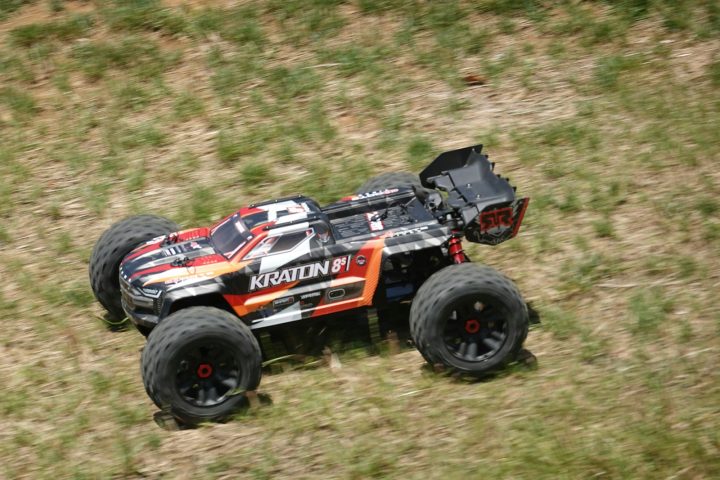
Stunts demand more from a car than casual driving, so the right machine matters. You’ll want a capable, durable hobby-grade car — typically with strong (often brushless) power, good suspension, and 4WD for control. Bashers, stunt trucks, and monster trucks are popular choices because they’re built to jump, flip, and survive hard landings.
Cheap toy-grade cars usually lack the power and durability for serious tricks, with one exception: dedicated double-sided stunt cars that are designed for 360 spins and flips. You’ll also want open space, ideally some ramps, soft landing areas to start, and spare parts, because crashes are part of the learning curve.
Stunts are 20% car and 80% driver. A capable car gives you the tools, but it’s your thumbs — your throttle control — that turn a crash into a clean backflip. 🤸
🎯 The Secret to Every Stunt: Throttle Control
If you learn one thing from this guide, make it this: throttle control is the foundation of every stunt. The difference between a wild crash and a controlled trick almost always comes down to how smoothly and precisely you work the throttle (and brake).
On the ground, a sharp punch of throttle pops wheelies and starts flips, while feathering (gentle, partial throttle) keeps things smooth and controlled. Practice modulating your throttle before attempting anything fancy — it’s the skill that unlocks everything else.
🤸 Popular Stunts & How to Do Them
Each of these builds on throttle control and a bit of bravery. Start with the simpler moves and work up — we’ll cover the key ones in detail below. See 4WD stunt cars on Amazon #ad
🧰 Gear & Setup
You don’t need everything at once, but a solid car, a ramp, and some open space will get you a long way. Soft surfaces like grass cushion early crashes while you build confidence. See RC ramps on Amazon #ad
📈 Skill Progression
Resist the urge to skip ahead. Each level builds the muscle memory for the next, and mastering the fundamentals first makes the flashy stuff far easier (and far less crashy) when you get there.
🛞 Mastering the Wheelie
The wheelie is the perfect first stunt and a brilliant way to learn throttle control. From a stop or slow roll, give a firm punch of throttle to lift the front wheels off the ground. The torque rotates the car backward onto its rear wheels — that’s your wheelie.
The trick is holding it: once the front lifts, feather the throttle to balance the car on its rear wheels without flipping over backward. Too much and it loops; too little and the nose drops. With practice you’ll find the sweet spot and hold long, smooth wheelies. This same throttle-modulation skill is exactly what you’ll use for flips and jumps.
🔄 Landing Your First Backflip
The backflip is the trick everyone wants. Here’s a clear, step-by-step way to land your first one safely:
- Master wheelies first. They teach you the throttle feel a flip needs.
- Set up a ramp on a soft surface like grass for forgiving landings.
- Approach with moderate speed, hitting the ramp straight on.
- At the lip, punch the throttle to drive the rotation backward into the flip.
- Watch the car’s rotation as it spins through the air.
- Ease off (or brake) to slow the spin as the wheels come back around toward the ground.
- Aim to land wheels-down, letting the suspension absorb the impact.
- Repeat and refine your timing and throttle until it’s consistent.
Some powerful cars can even snap a backflip from a standstill with a hard throttle punch, no ramp required. Either way, it’s all about that throttle-driven rotation and timing the landing. Expect a few tumbles before it clicks — that’s normal. See brushless RC cars on Amazon #ad
🌀 360 Spins & Donuts
Donuts and spins are flashy, fun, and beginner-friendly. To spin the car in place, apply full steering lock in one direction and add throttle — the car whips around in tight circles, kicking up a satisfying display. Vary the throttle and steering to control how tight and fast the spin is.
For full 360 flips and rolls, dedicated double-sided stunt cars shine — they’re designed to drive on either side and spin or flip at the press of a button. On a capable basher, you can also combine ramps and steering input for sideways barrel rolls and corkscrews once your skills grow. Smooth surfaces make spins easier and cleaner.
🚀 Big Jumps & Mid-Air Control
Big jumps are where mid-air throttle control truly pays off. Approach the ramp with enough speed to clear your gap, and hit it straight. Once airborne, remember the golden rule: tap the throttle to bring the nose up, and brake to bring the nose down. Use small inputs to level the car so it lands flat.
A flat, wheels-down landing lets the suspension soak up the impact and keeps you driving away clean, while a nose-down or tail-heavy landing often ends in a tumble. Start with small jumps to learn the timing, then build up height and distance as your air control improves. Reading the car’s attitude in the air becomes second nature with practice.
🧼 Caring for Your Car
Stunts are hard on a car, so upkeep keeps it performing. After sessions, check for loose screws, worn tires, bent parts, and damage from hard landings, and tighten or replace as needed. Keep a stash of common spare parts so a broken part doesn’t end your fun, and clean off dirt and debris that can wear components.
Look after your batteries too: charge and store LiPo packs safely, never run them flat, and inspect them for damage. A well-maintained car is more reliable, performs better, and lasts far longer through the abuse that stunts inevitably bring.
🛡️ Safety
Stunt smart and stay safe:
- 🤸 Use open space. Keep well away from people, pets, traffic, and obstacles.
- 🤸 Never aim at people. A fast car or ramp launch can cause injury.
- 🤸 Watch your surroundings. Stay aware of where the car will land.
- 🤸 Handle LiPo batteries safely. Charge, store, and inspect them with care.
- 🤸 Supervise children. Match the car’s power to the driver and keep an eye on young ones.
A little caution keeps stunting fun for everyone. Choose your spot wisely, respect the car’s speed and power, and you’ll enjoy years of trick-landing thrills without incident.
⚠️ Common Mistakes (and Easy Fixes)
Mistake 1: Too much throttle, all at once.
It causes wild, uncontrolled crashes. Fix: Practice feathering and smooth inputs.
Mistake 2: Using a weak toy-grade car.
It lacks power and breaks easily. Fix: Use a capable hobby-grade (or dedicated stunt) car.
Mistake 3: Practicing on hard surfaces.
Crashes do more damage. Fix: Start on grass or another soft surface.
Mistake 4: Ignoring mid-air control.
The car lands badly. Fix: Use throttle (nose up) and brake (nose down) to level it.
Mistake 5: Skipping the basics.
Advanced tricks fall apart. Fix: Master wheelies and throttle control first.
🔥 Pro Tips
- Drill throttle control first. It’s the skill behind every trick.
- Start on grass. Soft landings save your car while you learn.
- Build a simple ramp. It unlocks jumps and flips fast.
- Keep spares handy. Crashes shouldn’t end your session.
- Master one trick at a time. Then chain them into combos.
❓ Frequently Asked Questions
What kind of RC car is best for stunts?
A capable, durable hobby-grade car is best, typically a basher, stunt truck, or monster truck with strong (often brushless) power, good suspension, and 4WD. These are built to jump, flip, and survive hard landings. Dedicated double-sided stunt cars are also great specifically for spins and flips. Cheap toy-grade cars usually lack the power and durability for serious tricks, so choose accordingly.
How do I do a backflip with my RC car?
Master wheelies first, then set up a ramp on a soft surface. Approach at moderate speed, and at the lip punch the throttle to drive the backward rotation into the flip. Ease off or brake to slow the spin as the wheels come back toward the ground, aiming to land wheels-down so the suspension absorbs the impact. Powerful cars can sometimes flip from a standstill with a hard throttle punch.
How do I control my car in the air?
Use the throttle and brake. While airborne, applying throttle lifts the nose up and applying the brake drops the nose down, because spinning the wheels rotates the car’s body. Small, well-timed inputs let you level the car for a flat, wheels-down landing or rotate it for flips. This mid-air throttle control is the key skill for clean jumps and is worth practicing on small jumps first.
Can a beginner learn RC stunts?
Absolutely. Start with beginner-friendly moves like donuts and small wheelies to build throttle control, then progress to held wheelies, small jumps, and eventually backflips and combos. Practice on a soft surface like grass, master each skill before moving on, and be patient, since crashes are part of learning. With a capable car and steady practice, anyone can work up to impressive stunts.
Will doing stunts damage my car?
Stunts are hard on a car, so some wear and the occasional breakage are normal. Minimize damage by using a durable hobby-grade car, starting on soft surfaces, and landing wheels-down so the suspension absorbs impacts. Keep common spare parts on hand, check for loose or worn components after sessions, and maintain your batteries. With good upkeep, a capable car holds up well to regular stunting.
Do I need a ramp for stunts?
Not for everything. Wheelies, donuts, and drifting need no ramp, and some powerful cars can backflip from a standstill. But a ramp greatly expands what you can do, making jumps, flips, and big air far easier and more controllable. A simple ramp on a soft surface is one of the best, cheapest upgrades for learning aerial stunts, so it’s well worth adding once you’ve got the basics.
✅ Final Thoughts
Your RC stunt game plan:
- 🏎️ Get a capable, durable car (plus a ramp).
- 🎯 Master throttle control above all else.
- 🛞 Learn wheelies, then jumps, then flips.
- 🚀 In the air: throttle = nose up, brake = nose down.
- 🛡️ Practice safely on soft, open ground.
Bottom line: advanced RC car stunts are absolutely learnable with the right car, the right technique, and plenty of practice. Get yourself a capable machine, obsess over throttle control, start small on soft ground, and build your way up from wheelies to backflips and beyond. Embrace the crashes as part of the journey, keep your car maintained, and stay safe — then go land something epic. 🤸🚀
More action in our guides on
RC monster trucks,
the best off-road RC cars,
FPV RC cars, and
the best RC cars.

admin
Our editors are RC drivers first: every guide is written by someone who has owned, broken and rebuilt the category they cover. No paid placements, no fabricated ratings.